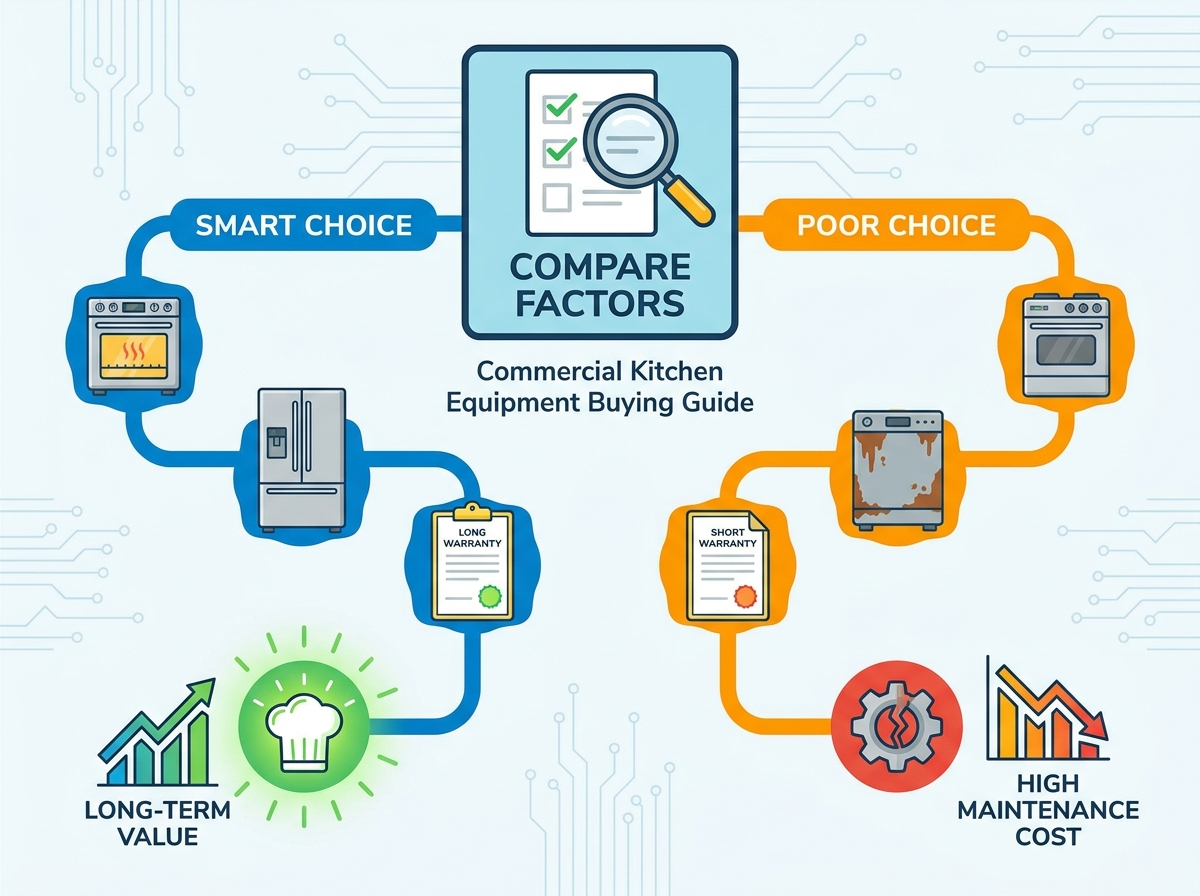
Outfitting a commercial kitchen represents one of the largest upfront capital expenditures for any food service operation. Making the wrong choices directly impacts your profit margins. Poor equipment selection creates severe workflow bottlenecks during peak hours. It spikes energy consumption, leads to frequent mechanical breakdowns, and ultimately limits your menu flexibility. We built this commercial kitchen equipment buying guide to help you navigate these operational risks. You need a rigorous evaluation framework to move past glossy spec sheets and sales pitches. This guide helps operators evaluate machinery based on compliance, operational reality, and immediate financial planning. You will learn how to map equipment directly to your menu needs. We cover how to navigate strict spatial constraints and verify crucial safety certifications. By following these principles, you protect your investment and build a kitchen designed for sustained profitability.
Menu Dictates Machinery: Equipment selection must strictly align with current and projected menu requirements to avoid purchasing redundant or underutilized capacity.
Spatial, Utility, and Aesthetic Constraints are Non-Negotiable: Exact measurements, ventilation capacity, existing utility infrastructure, and front-of-house visibility must be verified before shortlisting models.
Compliance and Support Mitigate Risk: Prioritizing reputable brands, NSF/UL-certified equipment, and robust local dealer support prevents costly operational downtime.
Table of Contents
Toggle
1. Menu-Driven Specifications and Capacity Requirements
Buying generic equipment without mapping it to specific prep and cook times creates massive bottlenecks. Peak service hours expose every inefficiency in your kitchen layout. You must align your hardware directly with your culinary output. A steakhouse requires vastly different thermal capacities than a high-volume bakery or a quick-service fried chicken concept.
Start by analyzing your peak volume requirements. Calculate your maximum covers per hour. Determine your target ticket times for different dayparts to understand the required throughput. If your goal is a twelve-minute ticket time for a fully plated entree, your cooking stations must recover temperature rapidly between orders.
Map specific cooking techniques to equipment categories. High-volume frying requires rapid oil recovery times to prevent greasy food. Precision sous-vide demands exact temperature stability. Rapid baking needs high-velocity convection airflow.
Evaluate menu flexibility. Consider if your core items will change seasonally. Ensure your primary cooking stations can adapt to new ingredients without requiring entirely new hardware.
Distinguish between quick-service and fine-dining needs. A quick-service restaurant prioritizes speed and batch cooking. Fine dining requires precision control for individual plating and delicate finishing techniques.
Overestimating capacity wastes capital and valuable floor space. You end up cooling or heating empty volume, which drains your utility budget. Underestimating capacity causes severe service delays. It burns out your staff and frustrates guests. Knowing how to choose kitchen equipment starts with a deep dive into your menu matrix. Build a spreadsheet listing every menu item, the required cooking method, and the maximum portions needed per hour. Use this data to dictate your burner counts, oven cavity sizes, and fryer vat capacities.
Menu Mapping to Equipment Specifications
Menu Concept
Primary Cooking Technique
Critical Equipment Specification
High-Volume Burger Joint
Continuous Grilling / Frying
1-inch thick griddle plate, high-BTU fryers with rapid recovery
High-output open burners, precision immersion circulators
Pizzeria
High-Heat Baking
Brick-lined deck ovens or high-speed conveyor ovens
2. Spatial Constraints, Workflow Layout, and Aesthetics
Equipment might fit perfectly on a floor plan but completely disrupt your kitchen brigade's ergonomic flow. It can also ruin the dining atmosphere in open-concept spaces if not selected carefully. You must account for the physical realities of your building before ordering heavy machinery.
Measure exact footprint allowances. Include required clearances for ventilation hoods. Type 1 hoods require specific overhangs beyond the edge of the cooking equipment, usually six inches on all sides. Map out fire suppression lines and nozzle drops. Account for equipment door swings in tight aisles to prevent collisions between staff members carrying hot pans.
Assess integration into standard kitchen layouts. Whether you use an assembly line, island, or zone-style setup, focus on staff ergonomics. Reduce physical strain wherever possible.
Minimize the steps cooks take between cold storage and hot lines. Place undercounter refrigeration directly beneath high-traffic prep stations.
Maintain proper aisle widths. Ensure passing cooks have enough clearance to move safely. A minimum of 36 inches is standard, but 42 to 48 inches is preferable for high-traffic hot zones.
Evaluate aesthetics and noise levels for open kitchens. Check the finish quality. Look for sleek, low-profile designs that do not obstruct sightlines.
Measure the decibel output of compressors and exhaust fans. Customer-facing setups must not disrupt the dining experience with industrial mechanical noise.
You often face trade-offs here. High-capacity floor models handle massive volume but consume premium space. Space-saving countertop alternatives fit easily but may force your team into frequent batch cooking. Evaluate your floor plan inch by inch. Tape out the dimensions on the actual floor to visualize the workflow before committing to large footprints.
3. Upfront Capital and Budget Allocation Strategies
Focusing strictly on the initial price tag without a broader financial strategy can derail your planning. You need a strategic approach to capital deployment to ensure your kitchen gets built without exhausting your startup funds. Smart operators know exactly where to spend heavily and where to compromise.
Categorize your equipment list into mission-critical versus secondary items. Primary ranges, ventilation systems, and walk-in refrigeration require top-tier investment. These are the engines of your kitchen. If they fail, your restaurant closes for the day. Specialized prep tools, stainless steel worktables, and storage shelving allow for tighter budgets. You can safely purchase these items from economy lines or even source them used.
Allocate your budget to protect your most critical revenue-generating stations first. If you run a pizzeria, your oven is your primary investment. If you run a sports bar, your fryers demand the highest budget allocation.
Consider leasing versus buying for high-turnover items. Leasing commercial ice machines or dishwashers often includes routine maintenance and emergency repairs. This preserves your startup capital for permanent fixtures and shifts the maintenance burden to the leasing company.
Factor in the availability of OEM replacement parts. Check the average cost of common wear items like gaskets, hinges, and heating elements before finalizing a purchase. Equipment with cheap upfront costs often relies on expensive, proprietary replacement parts.
Understand hardware depreciation schedules for tax purposes. Work with your accountant to maximize your financial returns on heavy equipment purchases during the first year of operation.
Compare the build quality of premium models against budget alternatives. Cheaper units often demand full replacement within three to five years due to structural failure. Premium units usually survive a decade with proper maintenance. Direct your capital toward the equipment that handles the heaviest daily physical abuse.
4. Energy Efficiency and Utility Infrastructure
Incompatible utility connections trigger massive retrofitting costs. Energy-hogging equipment inflates your monthly overhead permanently and cuts directly into your profit margins. You cannot simply plug commercial equipment into standard wall outlets. The infrastructure must match the machinery exactly.
Verify your existing building infrastructure before looking at catalogs. Check the phase and voltage of your electrical panels. Confirm if you have single-phase or three-phase power available on site. Running new three-phase power to an older building requires extensive electrical engineering and permits. Confirm gas line BTU capacities. Ensure your main line can supply enough pressure when all burners, ovens, and fryers run simultaneously during a Friday night rush. A pressure drop causes equipment to underperform, leading to raw food and extended ticket times.
Measure water pressure and drainage capabilities. Steamers, combi-ovens, and ice machines require specific flow rates. They also require dedicated indirect floor drains to function correctly and meet plumbing codes.
Evaluate ventilation makeup air. High-BTU equipment requires massive exhaust hoods. These hoods pull thousands of cubic feet of air out of the building per minute. You must install sufficient makeup air systems to keep the building pressure balanced, otherwise, your front doors will suck open and your HVAC system will fail.
Evaluate ENERGY STAR ratings. Look for potential municipal utility rebates to offset initial costs. High-efficiency models often pay for their premium pricing through lower monthly utility bills.
Failing to match equipment specifications to your building’s current utility load carries heavy risks. You might trip breakers constantly. You could void manufacturer warranties by supplying incorrect voltage. You may face expensive electrical contractor upgrades just to turn the units on. Always cross-reference the manufacturer's spec sheet with your general contractor.
Utility Verification Checklist
Utility Type
Critical Verification Points
Common Pitfalls
Electrical
Voltage (120V/208V/240V), Phase (1 vs 3), Amperage
Ordering 3-phase equipment for a 1-phase building
Natural Gas
Total BTU load, pipe diameter, regulator pressure
Undersized gas lines causing pressure drops during peak hours
Plumbing
Water line size, PSI, floor sink availability
Connecting steamers to hard water without inline filtration
Ventilation
CFM exhaust rating, makeup air balance
Placing heavy grease-producing equipment under a Type 2 hood
5. Durability, Materials, and Build Quality
Commercial kitchens are brutal environments. Residential-grade or thin-gauge materials warp, corrode, and fail under continuous daily use. You must prioritize structural integrity. The equipment will endure extreme heat, acidic food spills, heavy impacts, and harsh chemical cleaners every single day.
Compare stainless steel grades. Type 304 stainless steel resists corrosion better than Type 430. It contains more nickel and chromium, making it ideal for wet environments like dish pits and prep sinks. Type 430 is acceptable for dry storage or side panels, but it will pit and rust if exposed to constant moisture or acidic tomato sauce.
Check the gauge thickness for structural integrity. Lower gauge numbers mean thicker, stronger steel. A 14-gauge table withstands heavy pounding and meat tenderizing better than an 18-gauge table.
Avoid galvanized steel for food contact surfaces or legs. It rusts quickly when scratched and cannot withstand harsh commercial floor cleaners.
Assess the quality of moving parts. Inspect heavy-duty hinges and reinforced door gaskets. Evaluate the build quality of compressors and heating elements.
Look for fully welded seams rather than spot-welded or riveted joints. Welded seams prevent grease and bacteria from accumulating in crevices.
Weekend warrior or prosumer equipment cannot survive a full-time commercial environment. Static structural components might hold up briefly. However, moving parts will shatter under commercial volume. Expect realistic wear-and-tear. Invest in heavy-duty construction for any handle, door, or switch you touch daily. A residential refrigerator door might open twenty times a day. A commercial line cooler door opens hundreds of times per shift.
6. Health Code Compliance and Safety Certifications
Non-compliant equipment leads to failed health inspections, forced closures, and severe liability issues. Every piece of hardware must meet strict regulatory standards before entering your kitchen. Health inspectors and fire marshals will check the certification plates on your equipment during their initial walkthrough.
Identify mandatory sanitation certifications. Look for NSF (National Sanitation Foundation) or ANSI marks. These guarantee the equipment is designed for safe food contact and easy cleaning. NSF certification ensures the unit has coved corners, smooth welds, and non-toxic materials that will not harbor dangerous bacteria.
Verify mandatory electrical and fire safety certifications. Ensure products carry UL, CE, or ETL listings. These prove the unit meets commercial fire and electrical codes.
Check local municipal codes. Some cities require specific ventilation interlocks or specialized grease traps for certain equipment types.
Understand the cost of non-compliance. Failing an inspection damages your reputation, incurs heavy fines, and halts your revenue stream entirely.
Purchasing imported or unverified equipment lacking local regulatory approval is a massive risk. Health inspectors will render it legally unusable. This forces you to buy compliant replacements immediately, doubling your capital expenditure. Never attempt to sneak residential appliances into a commercial kitchen to save money. The liability risk in the event of a fire or foodborne illness outbreak is catastrophic.
7. Maintenance Accessibility and Cleaning Protocols
Equipment that is difficult to clean increases your daily labor costs. Neglected maintenance eventually causes catastrophic hardware failure during your busiest shifts. If a machine takes two hours to break down and clean, your closing staff will inevitably skip steps, leading to grease fires or broken motors.
Evaluate physical design features. Look for coved corners that prevent grease buildup. Check for removable drip trays that fit easily into your commercial dishwasher. Prioritize tool-less access to grease filters, burner grates, and condenser coils. If a cook needs a screwdriver to access a daily cleaning zone, that zone will never get cleaned.
Assess the complexity of preventative maintenance. Review the daily, weekly, and monthly cleaning schedules required to keep the unit operational.
Consider the chemical requirements. Some machines require expensive, proprietary deliming agents or degreasers to maintain their warranty status.
Review access panels. Ensure technicians can reach critical components without pulling the entire unit away from the wall or disconnecting hard-piped gas lines.
Look for front-breathing refrigeration units if you plan to install them in tight spaces or under counters. Rear-breathing units will choke on dust and overheat if pushed flush against a wall.
Advanced features often require specialized technicians for basic repairs. Simpler mechanical controls allow in-house staff or general maintenance personnel to fix issues quickly. Balance the desire for high-tech features against your team's ability to maintain them daily. A basic manual gas valve rarely breaks, whereas a digital touchscreen controller can fail if exposed to excessive steam.
8. Brand Reputation, Warranty Terms, and Local Dealer Support
A comprehensive warranty means nothing if the manufacturer lacks a local service network. You need rapid repairs to minimize downtime and keep your kitchen running. If your primary walk-in cooler goes down on a Saturday morning, you cannot wait until Tuesday for a technician to fly in from another state.
Research manufacturer track records. Read peer reviews and verify the long-term stability of the brand. They must be around to honor warranties and supply parts years down the line. Established brands maintain extensive networks of authorized service agents and regional parts depots.
Deconstruct the warranty types. Understand the difference between parts and labor coverage. Look for specific compressor warranties on refrigeration, which often extend to five years.
Watch out for pro-rated terms that decrease in value over time. Read the fine print regarding overtime labor. Many warranties only cover standard business hours, leaving you to pay the emergency weekend dispatch fee.
Evaluate the Service Level Agreement (SLA). Check the guaranteed response times of local authorized service agents. A four-hour response time is vastly superior to a 48-hour window.
Avoid gray market equipment. Purchasing unauthorized imports voids manufacturer warranties and eliminates your access to certified replacement parts.
Improper installation voids most warranties. Always use certified technicians. Install required accessories, like inline water filtration systems for steam equipment. Reading a comprehensive restaurant equipment guide helps clarify these warranty pitfalls before you sign a purchase order. Keep all installation invoices and startup logs in a dedicated binder for the health inspector and warranty claims.
9. Scalability and Multi-Use Versatility
Single-function equipment monopolizes valuable kitchen real estate. It limits your ability to pivot the menu or scale operations during busy seasons. As your restaurant grows, your kitchen must adapt without requiring a complete demolition and rebuild.
Assess multi-functional equipment. Combi-ovens and tilt skillets can replace several traditional units. A single combi-oven often replaces a steamer, convection oven, and proofing cabinet. It allows you to bake bread in the morning, steam vegetables in the afternoon, and roast meats overnight. A tilt skillet functions as a braising pan, a flat top griddle, a deep fryer, and a stockpot.
Evaluate modular equipment that scales. Look for units you can stack or expand. Stackable convection ovens or modular drawer warmers allow you to add capacity incrementally.
Consider mobility. Equipment mounted on heavy-duty casters allows you to reconfigure the cookline for different menus. Casters also make deep cleaning behind the equipment significantly easier, keeping you in compliance with health codes.
Look for quick-disconnect gas hoses. These allow staff to safely move gas equipment for cleaning without calling a plumber.
Multi-use equipment does carry a higher upfront cost. It also requires a steeper learning curve for your staff compared to traditional, single-purpose units. You must invest in proper training to realize the full efficiency gains of these versatile machines. If you buy a highly advanced combi-oven but your staff only uses it as a basic warmer, you have wasted your capital.
10. Technology Integration and Automation
Smart kitchen technology promises incredible efficiency. However, it can introduce unnecessary complexity and new points of failure if it misaligns with your staff's capabilities. You must evaluate technology based on its ability to solve actual operational problems, not just for the sake of having digital screens.
Review programmable controls. Check for recipe memory functions. These ensure consistent execution regardless of which cook is on duty. You can program exact temperature curves and humidity levels for specific dishes. Look for automated self-cleaning cycles that save end-of-shift labor and ensure the machine is properly sanitized overnight.
Assess IoT (Internet of Things) capabilities. Remote temperature monitoring ensures automatic HACCP compliance logging, eliminating the need for staff to manually record cooler temperatures on paper clipboards.
Look for predictive maintenance alerts. Smart equipment can warn you of a clogged filter or a struggling compressor before it fails completely.
Evaluate user interfaces. Touchscreens must be responsive even when operators wear gloves or have wet hands. The interface should be intuitive enough for a new hire to understand within ten minutes.
Look for cloud-based recipe updates. Multi-unit operators benefit greatly from pushing menu changes to all ovens simultaneously via Wi-Fi.
Technology should simplify operations, not complicate them. Ensure your management team understands how to program and troubleshoot these smart units. A high-tech oven is useless if the staff defaults to manual mode because the interface is too confusing. Train your team thoroughly on the digital features to maximize your investment.
Conclusion
Audit your current menu to finalize exact capacity and volume requirements before looking at equipment catalogs.
Measure your physical kitchen space and verify all electrical, gas, and plumbing capacities with a licensed contractor.
Categorize your equipment list into mission-critical and secondary items to allocate your startup capital effectively.
Contact local authorized service agents to confirm they support and carry parts for the specific brands you intend to purchase.
Review all warranty terms to ensure you understand the maintenance requirements needed to keep coverage active.
FAQ
Q: What is the most important factor when choosing commercial kitchen equipment?
A: Your menu is the most critical factor. Every piece of equipment must directly support your specific cooking techniques, prep times, and peak volume requirements to prevent service bottlenecks. Do not buy equipment until your menu is finalized.
Q: Do I really need NSF-certified equipment?
A: Yes. Health inspectors look specifically for NSF or ANSI certifications. Uncertified equipment violates local health codes and will likely result in failed inspections or forced operational closures. It guarantees the unit is safe for food contact.
Q: Should I buy new or used restaurant equipment?
A: Mission-critical items like refrigeration and primary ranges should generally be purchased new to secure warranties and ensure reliability. Stainless steel prep tables, sinks, and shelving are safe to buy used since they lack mechanical parts.
Q: How do I know if my building has the right utilities?
A: Hire a licensed contractor to audit your electrical panels, gas line BTUs, and plumbing infrastructure. Match these site measurements against the exact specification sheets of your desired equipment before purchasing to avoid expensive retrofits.
Q: What makes commercial equipment different from residential models?
A: Commercial equipment uses heavier-gauge stainless steel, robust compressors, and reinforced hinges designed to withstand continuous, high-volume daily use. Residential models will quickly fail under commercial stress and lack required health certifications.
Q: Can I install commercial equipment myself to save money?
A: No. Improper installation by uncertified personnel usually voids the manufacturer's warranty immediately. You also risk severe safety hazards, gas leaks, and code violations. Always hire licensed commercial installers and plumbers.
Today,we are proud to offer over 5,000 types of food machinery, including kitchen equipment, bakery equipment, and hospitality products. We are particularly prominent in the field of refrigeration, such as flast freezers, coolers, ice makers, etc. We often provide quality engineered equipment for restaurants, bakeries, schools, hotels, companies and other projects, and have received rave reviews from our customers.
CONTACT US
+86-137-2686-2678 +86-137-6077-3620 ivy@cnglead.com.cn Buliding 101, No.44 Fuxing Road, Shawan Street, PanYu District, Guangzhou City, Guangdong Province, China