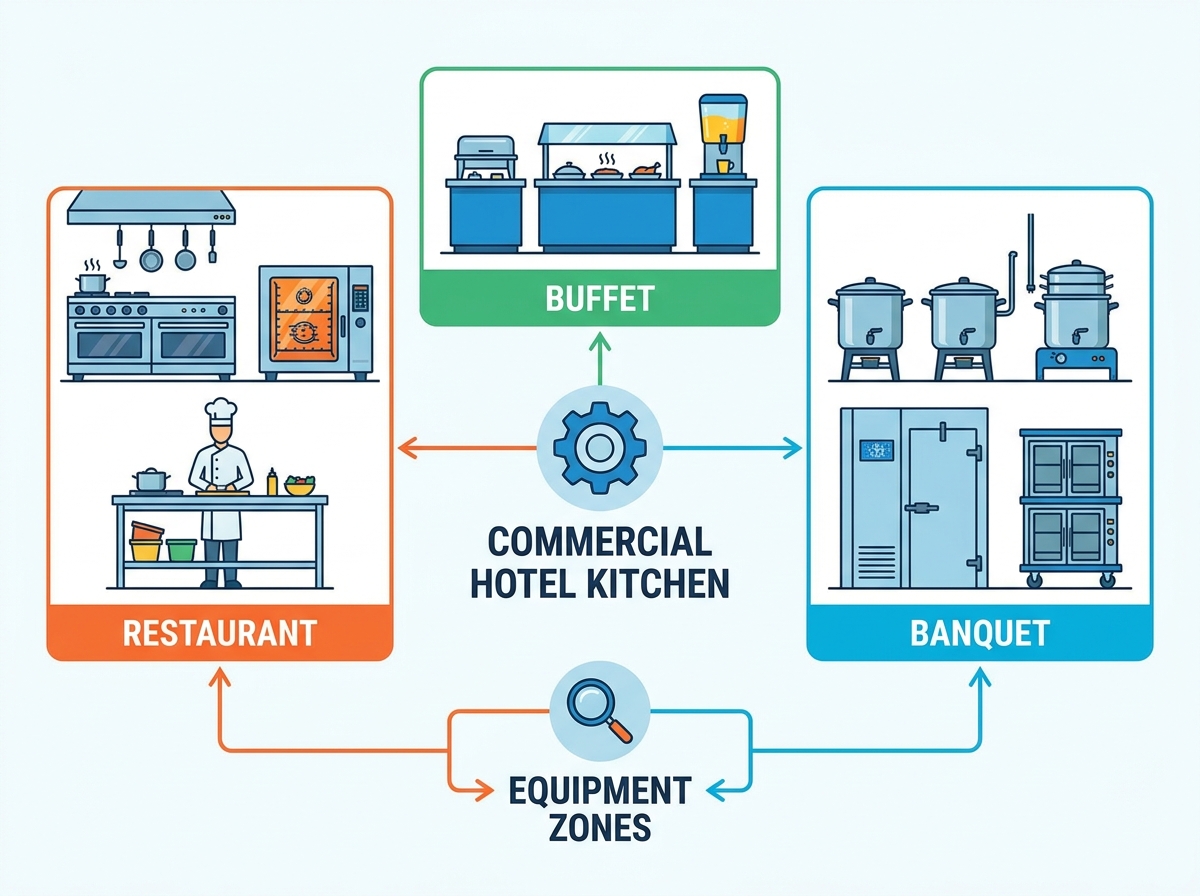
Operating a hotel food and beverage program requires supporting multiple distinct operational models. You must manage a la carte dining, high-volume banquets, continuous room service, and breakfast buffets from a single centralized footprint. Fragmented purchasing decisions create operational bottlenecks. They lead to excessive energy consumption and leave you with equipment unable to scale during peak seasonal occupancy. Specifying the wrong capacity or utility type results in costly retrofits and forces unwanted menu limitations. This guide breaks down the essential hotel kitchen equipment list. We provide technical evaluation criteria to help food and beverage directors and procurement teams succeed. You will learn how to specify a commercial hotel kitchen built for maximum yield, workflow efficiency, and long-term reliability.
Multi-Functionality is Mandatory: Prioritize versatile assets like combi ovens and blast chillers that can pivot between delicate a la carte prep and bulk banquet regeneration.
Menu-Driven Specifications: A high-performance hotel kitchen equipment list must be reverse-engineered from the specific F&B program, ensuring capital isn't wasted on specialized gear for outsourced menu items.
Capacity Must Match Peak Demand: Equipment sizing must be calculated based on maximum banquet seating plus concurrent restaurant turnover, not average daily occupancy.
Workflow Zoning Dictates Specs: Equipment selection must align with distinct zones (prep, hot line, banquet holding, warewashing) to prevent cross-traffic and ensure compliance with health codes.
Table of Contents
Toggle
How to Plan an Efficient Hotel Kitchen
A successful hotel kitchen layout starts with understanding the menu, service volume, and operational needs before selecting equipment. Evaluate peak demand, required output, and utility capacity to avoid undersized stations or costly upgrades. Equipment should match the actual menu rather than possible future needs, focusing investment on high-use items. Plan clear workflow zones from receiving and storage to preparation, cooking, and service to reduce delays and maintain food safety. Before purchasing, verify gas, water, drainage, ventilation, and electrical requirements to ensure the facility can support the selected equipment.
Essential Cooking Equipment for Hotel Kitchens
Commercial Ovens for Hotel Food Production
Ovens are essential for hotel kitchens, especially for high-volume food production. Combi ovens combine convection heat and steam, making them suitable for roasting, steaming, and banquet food regeneration while maintaining food quality. Boiler systems provide faster steam production but require better water treatment, while boilerless models handle hard water more easily. Convection ovens are ideal for general baking and roasting, while deck ovens are mainly used for specialized needs such as artisan bread and pizza production.
Oven Type
Primary Function
Utility Requirements
Best Hotel Application
Combi Oven
Steaming, roasting, regenerating
Water line, drain, high-voltage electric or gas
Banquet plating, high-yield protein roasting
Convection Oven
Dry baking, roasting
Gas or standard electric
Par-baked goods, bulk sheet pan cooking
Deck Oven
High-heat bottom baking
Gas or high-voltage electric
Artisan breads, in-house pizza programs
Ranges, Grills, and Charbroilers
Your cooking line setup should match your menu and service volume. High-output burners are ideal for heavy sautéing and boiling, while griddles work well for breakfast and high-volume cooking. Charbroilers provide strong grilling performance but require proper ventilation due to smoke production. Gas cooking offers flexibility and high heat, while induction provides precise control, lower kitchen heat, and better energy efficiency. Many hotels combine both options based on different cooking needs.
Commercial Fryers
Commercial fryers must be selected based on capacity, recovery speed, and safety requirements. High-efficiency fryers quickly restore oil temperature after adding frozen foods, helping maintain consistent food quality. Choose the oil capacity according to service demand, such as room service or bar operations. Built-in filtration systems improve oil life and reduce safety risks, while proper placement away from flames and water sources helps create a safer cooking environment.
Speed Ovens and Commercial Microwaves
Speed ovens are ideal for hotels that need fast food preparation, especially for room service and lobby operations. They combine microwave, convection, and radiant heating technologies to reduce cooking time while maintaining food quality. Commercial microwaves are suitable for quick heating and defrosting tasks, but heavy-duty models should be selected for continuous use. Stainless steel construction and programmable controls help ensure reliable performance during busy service periods.
Food Holding Equipment for Buffets and Banquets
Heated Carts and Food Holding Cabinets
Banquet carts are essential for transporting hot food across large hotel properties while maintaining quality and safety. Choose carts with strong insulation and humidity control to keep meals warm, moist, and ready for service. Durable casters help withstand frequent movement across elevators and corridors, while reliable temperature control ensures food stays above safe holding temperatures without affecting texture or taste.
Steam Tables and Buffet Line Solutions
Steam tables keep bulk food hot during extended breakfast and event buffets. Evaluate well configurations based on your pan sizes. Choose between dry and wet operation. Wet wells use heated water to provide gentle, even heat. They prevent scorching but require floor drains and dedicated water lines. Dry wells are easier to install but can create hot spots that dry out delicate sauces.
Balancing aesthetic appeal with function is vital for buffet equipment. Front-of-house equipment must look pristine while withstanding back-of-house abuse. Sneeze guards are a strict health code requirement. Ensure all glass guards meet current NSF standards for height and coverage. Drop-in heated wells offer a cleaner, flush-mounted look for permanent granite buffet counters.
Commercial Refrigeration and Ice Equipment
Walk-In Coolers and Freezers (Bulk Storage)
Walk-in coolers are essential for hotel inventory storage, so proper insulation, durability, and refrigeration design are critical. Thick insulated panels help maintain stable temperatures, while reinforced floors and protective door plates prevent damage from heavy carts and deliveries. Remote refrigeration systems reduce kitchen heat and noise, while self-contained units offer easier installation. Proper sizing based on storage volume and peak demand helps prevent temperature issues and food waste.
Reach-Ins and Prep Line Refrigeration
Line cooks rely on reach-in refrigeration to survive busy services. Evaluate drawer versus door configurations. Refrigerated chef bases with heavy-duty drawers sit directly under griddles. Cooks can pull raw proteins without stepping away from the heat. Upright reach-ins hold prepped backup pans and sauces.
Compressor placement impacts maintenance schedules. Top-mounted compressors breathe cleaner air. They are ideal for prep areas heavy with airborne flour. Bottom-mounted compressors pull cooler air from near the floor. They perform better in hot ambient environments like the main cook line. Regardless of placement, ensure all units feature digital temperature displays and door alarms.
High-Yield Ice Machines
Hotel ice machines should be selected based on peak demand rather than average usage. Consider the required 24-hour ice production capacity and choose the right ice type for different applications, such as slow-melting cubes for bars or flake ice for food preparation. Water filtration is also essential because hard water can cause scale buildup, reduce efficiency, and increase maintenance costs. Proper filtration helps extend machine life and maintain clean, high-quality ice.
Beverage Equipment for Hotel Restaurants and Room Service
Commercial Coffee and Espresso Equipment
Breakfast buffets run on continuous coffee service. Plumbed brewing systems are essential. They draw water directly from your supply lines, eliminating the need for staff to manually fill heavy reservoirs. Dual-shuttle brewers allow you to brew a fresh batch while serving from the other. This ensures the coffee station never runs empty during the morning rush.
Lobby bars and restaurants require high-quality espresso. Traditional manual machines require specialized barista training. Super-automatic espresso machines solve this labor challenge. They grind, tamp, and extract shots at the push of a button. They deliver consistent quality regardless of staff turnover. Ensure your electrical rough-ins match the high voltage requirements of commercial espresso equipment.
Juice and Cold Beverage Dispensers
Cold beverage dispensers must handle high-pulp juices and dairy products safely. Look for machines with built-in agitators. Agitators keep fresh juices mixed and prevent unsightly separation in the bowl. Portion control settings help manage food costs on expensive fresh-squeezed items.
Ease of daily breakdown is an evaluation metric you cannot ignore. Health codes require daily sanitization of all beverage contact surfaces. If a machine takes an hour to disassemble, staff will skip the cleaning. Specify dispensers with simple, tool-free valve removal. This prevents sticky buildup and eliminates the risk of fruit fly infestations.
Food Preparation Equipment for Hotel Kitchens
Commercial Mixers and Slicers
Commercial mixers and slicers improve food preparation efficiency in busy kitchens. Commercial mixers, slicers, food processors, and blenders help improve kitchen efficiency by reducing manual preparation time. Select mixers based on workload, with gear-driven models for heavy dough and belt-driven models for lighter tasks. Food processors with continuous-feed designs are suitable for high-volume preparation, while batch bowls work well for sauces and purees. For front-of-house use, choose quieter blenders with sound covers, while back-of-house models should focus on powerful motors, durable components, and easy cleaning.
Stainless Steel Prep Tables and Sinks
Prep tables and sinks are essential for efficient and hygienic kitchen operations. Stainless steel prep tables, especially 304-grade models, provide strong corrosion resistance and durability for daily use. Reinforced shelves and raised edges help improve safety and prevent spills. Sink layouts should follow health requirements, with dedicated handwashing stations, deep cleaning sinks, and strong spray valves to simplify cleaning and maintain food safety.
Dry Storage Solutions for Hotel Kitchens
Commercial Shelving Units
Proper shelving helps maximize storage space while keeping ingredients safe and organized. In humid areas like walk-in coolers, epoxy-coated wire shelving prevents rust and allows better air circulation. For dry storage, stainless steel shelving provides strong support for heavy items and helps prevent spills from affecting lower products. Adjustable shelving systems also make it easier to store different sizes of containers and boxes efficiently.
Ingredient Storage Racks and Bins
Proper food storage starts by keeping ingredients safe and organized. Regulations require bulk ingredients to be stored off the floor, and dunnage racks provide a strong, rust-resistant platform for items like flour, rice, and potatoes. Mobile ingredient bins make transportation easier, reduce manual handling, and keep preparation areas clean and efficient. Choosing the right storage equipment helps improve workflow and maintain food safety standards.
Dishwashing and Kitchen Sanitation Equipment
High-Capacity Commercial Dishwashers
A hotel kitchen needs reliable dishwashing equipment to handle high-volume operations. Conveyor dishwashers are suitable for large events and banquets, while flight-type machines provide continuous cleaning for larger resorts. When choosing between high-temperature and low-temperature systems, consider sanitation needs, energy use, drying speed, and water quality. High-temperature machines offer faster drying, while low-temperature models use less energy but rely on chemical sanitizers.
Dish Room Ventilation and Drainage Solutions
Dishwashing areas produce a lot of heat, steam, and moisture, so proper ventilation and drainage are essential. Exhaust systems help remove steam from high-temperature dishwashers, preventing uncomfortable working conditions and moisture damage. Floor troughs with anti-slip covers help collect water and debris, keeping the area safe and dry while ensuring proper drainage.
Equipment Utility Comparison Guide
Understanding utility demands helps prevent costly installation errors. Use this reference when planning your Hotel Kitchen Equipment layout.
Equipment Type
Primary Utility Required
Ventilation Need
Best Use Case
Combi Oven (Boilerless)
High Voltage Electric / Water Line
Type 1 or Type 2 Hood
Banquet regeneration, precise roasting.
Gas Range (Open Burner)
Natural Gas / Propane
Type 1 Hood (Grease)
High-volume saute, continuous pan work.
Induction Cooktop
High Voltage Electric
Type 1 Hood (Grease)
Low ambient heat cooking, delicate sauces.
High-Temp Dishwasher
Electric (Booster) / Hot Water
Type 2 Hood (Steam)
Rapid dish turnaround, glassware sanitation.
Commercial Fryer
Natural Gas / Electric
Type 1 Hood (Grease)
High-turnover frozen appetizers, fries.
Conclusion
Audit your exact menu requirements and peak banquet capacities before contacting equipment suppliers.
Measure all existing doorways, hallways, and elevator cabs to guarantee large equipment can reach the kitchen during installation.
Verify your electrical panel capacity, gas line diameter, and hood ventilation CFM with a licensed contractor.
Establish clear workflow zones separating raw prep, hot cooking, and dirty warewashing to maintain health code compliance.
FAQ
Q: How do I determine the right size for a walk-in cooler?
A: Calculate size based on your peak seasonal inventory and delivery frequency. A general rule is 1.5 cubic feet of storage per meal served daily. Always account for shelving footprints and ensure aisles are wide enough for rolling carts or pallet jacks.
Q: What is the difference between a combi oven and a convection oven?
A: Convection ovens circulate dry hot air to cook food evenly. Combi ovens combine that dry convection heat with injected steam. This allows combi ovens to roast, steam, poach, and regenerate plated banquet meals without drying out the food.
Q: Why is induction cooking becoming popular in hotels?
A: Induction uses magnetic fields to heat the pan directly, rather than the surrounding air. This drastically reduces the ambient temperature in the kitchen, lowering HVAC cooling costs and providing a more comfortable working environment for the culinary team.
Q: How many fryers does a standard hotel kitchen need?
A: This depends entirely on your menu. A property with heavy bar food and room service demands might need a battery of three 75-pound fryers. Always separate seafood fryers from standard fryers to prevent flavor transfer and manage allergen risks.
Q: What are the electrical requirements for commercial espresso machines?
A: Most commercial multi-group espresso machines require dedicated 220V/240V electrical circuits. They draw significant amperage to maintain boiler temperatures. Never attempt to run a commercial espresso machine on standard 120V wall outlets.
Q: How can we improve ventilation in a high-volume kitchen?
A: Ensure your exhaust hoods are sized correctly for the BTU output of the equipment below them. Implement a make-up air system that replaces the air pulled out by the hoods. Clean your grease filters weekly to maintain proper airflow.
Today,we are proud to offer over 5,000 types of food machinery, including kitchen equipment, bakery equipment, and hospitality products. We are particularly prominent in the field of refrigeration, such as flast freezers, coolers, ice makers, etc. We often provide quality engineered equipment for restaurants, bakeries, schools, hotels, companies and other projects, and have received rave reviews from our customers.
CONTACT US
+86-137-2686-2678 +86-137-6077-3620 ivy@cnglead.com.cn Buliding 101, No.44 Fuxing Road, Shawan Street, PanYu District, Guangzhou City, Guangdong Province, China