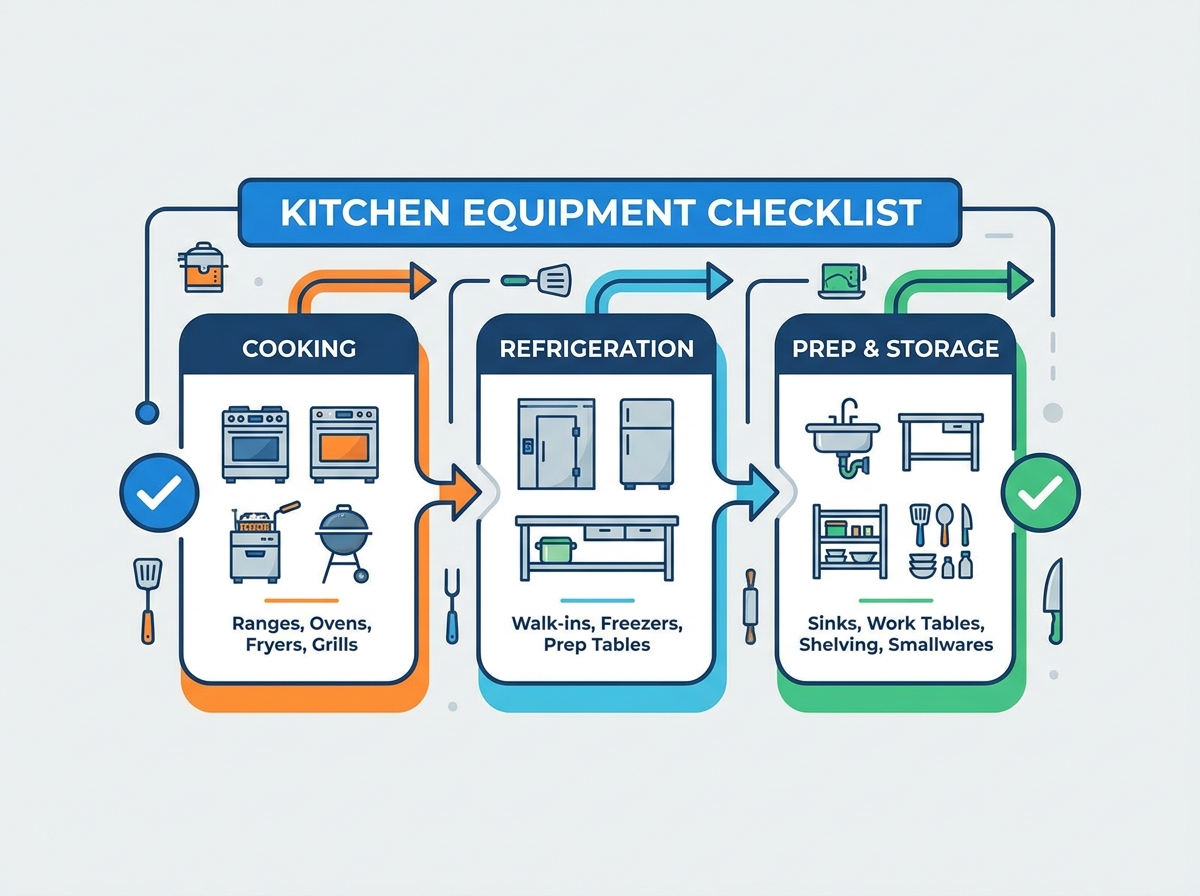
Capital expenditure on kitchen equipment represents one of the highest upfront costs for a new restaurant. This initial cash outlay directly impacts your operational runway and path to profitability. Over-equipping drains cash flow and clutters the line. Under-equipping bottlenecks service, drives up labor costs, and risks severe health code violations. To optimize capital allocation, operators must build a kitchen equipment checklist based on strict menu requirements, volume projections, and spatial constraints rather than relying on generic industry lists. You need a layout that supports high-volume output without forcing line cooks to cross paths. Every burner, prep table, and refrigeration unit must justify its footprint. We will break down exactly how to evaluate, select, and phase your equipment purchases to build a highly functional commercial kitchen that passes inspection and handles peak service efficiently.
Key Takeaways
Menu-Driven Procurement: Equipment selection must map directly to specific prep and cook processes to avoid purchasing redundant or underutilized units.
Strategic Sourcing & Phasing: Balance capital expenditure by strategically mixing new, used, and leased equipment, and prioritize essential "engine" items before scaling up.
Compliance and Infrastructure: Equipment choices must align with existing utility capacities (electrical phases, gas lines) and meet local health/fire codes (NSF, UL, CE certifications).
Table of Contents
Toggle
Strategic Evaluation Criteria for Restaurant Kitchen Equipment
Menu Engineering and Workflow Mapping
Procuring your restaurant kitchen equipment starts with a finalized menu. You cannot buy hardware without knowing exactly what you plan to cook. Reverse-engineer your prep and cook processes. If your menu features heavily sautéed items, you need maximum burner space. If you focus on roasted meats, prioritize oven capacity. Map out the physical workflow on the floor. Ingredients must move seamlessly from walk-in coolers to prep stations. From prep, they shift to the hot line. Finally, plated food reaches the expo window. Poor equipment placement forces cooks to cross paths. This creates physical bottlenecks during service. It slows down ticket times and frustrates your staff. Build your layout to support linear movement. Keep the fry station away from the salad prep area to prevent grease migration. Place undercounter refrigeration directly beneath the primary cooking suite so cooks do not have to step off the line to grab proteins.
Spatial, Utility, and Scalability Constraints
Never order equipment before auditing your building infrastructure. You must verify your existing utility capacities on site. Check your electrical panels first. Commercial equipment often requires three-phase power. If your building only has single-phase power, upgrading requires a massive electrical overhaul. Verify your gas line dimensions and total BTU capacity. A high-output charbroiler might exceed your current gas supply, starving other appliances on the line. Measure your exhaust hood dimensions carefully. All heat-producing equipment must fit strictly under the hood overhang per fire codes. Consider future scalability. Choose modular equipment blocks. This allows you to swap out a small 24-inch griddle for a 48-inch unit later. You can adapt to higher volumes without tearing down the entire line. Always measure your exterior doorways and hallways to ensure the equipment can actually fit into the building upon delivery.
Utility Type
Verification Check
Common Pitfall
Electrical
Confirm single-phase vs. three-phase power availability at the panel.
Ordering a three-phase dough mixer for a single-phase building.
Gas
Calculate total BTU requirements against the main gas line diameter.
Starving the primary range because the charbroiler pulls too much gas.
Ventilation
Measure the exact overhang of the Type 1 hood.
Placing an oven partially outside the hood footprint, failing fire inspection.
Plumbing
Check floor drain locations and grease trap capacity.
Installing a combi-oven without a nearby floor sink for condensation drainage.
Core Cooking Equipment: The Engine of the Kitchen
Commercial Ranges and Ovens
The range acts as the workhorse of your hot line. You must choose between gas and electric models. Gas ranges offer immediate heat control and visual flame feedback, which most line cooks prefer. Electric models provide consistent, even heating but often suffer from slower recovery times. Evaluate your oven needs carefully based on your daily prep list. Standard ovens work well for basic holding and slow roasting. Convection ovens use internal fans to circulate hot air. They reduce cooking times by up to 25 percent and bake multiple racks evenly. Combi-ovens combine steam and convection heat. They carry a higher initial capital requirement. However, they replace multiple pieces of equipment. A single combi-oven can steam vegetables, roast pork shoulders, and bake bread. This saves highly valuable footprint space on the line and reduces the need for separate steamers and convection units.
Commercial Fryers and Griddles
High-volume fry stations require rapid temperature recovery. When you drop a basket of frozen fries, the oil temperature plummets. Fryers with high BTU ratings heat the oil back up quickly. This prevents greasy, soggy food. Pay attention to oil capacity. A 50-pound fryer handles heavy demand better than a 35-pound unit. Consider built-in oil filtration systems. Filtering oil manually with a stockpot and a china cap is dangerous and time-consuming. Built-in systems extend the life of your cooking oil by removing fine sediment daily. They also improve food quality and reduce labor hours. Griddles demand similar scrutiny. Thicker griddle plates—typically one inch thick—retain heat better during continuous burger or pancake service. Thinner plates warp under heavy use and create frustrating cold spots.
Specialty Cooking Gear
Specialty equipment depends entirely on your specific concept. Salamanders are excellent for melting cheese or finishing steaks. They mount directly above your ranges, saving floor space. Charbroilers deliver authentic grill marks and smoky flavor. However, they produce massive amounts of grease-laden smoke. Sous-vide immersion circulators offer precise temperature control for proteins. They reduce line chaos and ensure perfect doneness during a rush. Before adding specialty gear, check your ventilation capacity. Heavy smoke-producing equipment requires higher exhaust fan ratings. Do not buy niche equipment for a single menu item. Ensure every piece of specialty gear supports multiple dishes to justify its footprint.
Verify the item fits under the existing Type 1 hood overhang.
Confirm the exhaust fan can handle the additional smoke and grease load.
Check if the unit requires a dedicated electrical circuit or specific gas regulator.
Map out exactly which menu items will utilize the equipment daily.
Commercial Refrigeration Equipment: Compliance and Preservation
Walk-In vs. Reach-In Refrigerators and Freezers
Proper refrigeration preserves your inventory and prevents foodborne illness. Walk-in coolers handle bulk storage. Size your walk-in based on delivery frequency and seating capacity. If you get deliveries twice a week, you need more capacity than a kitchen receiving daily drops. Reach-in refrigerators sit directly on the line. They hold prepped ingredients for immediate service. Evaluate compressor configurations carefully. Top-mount compressors pull in warmer air near the ceiling. They are prone to clogging in kitchens with heavy flour use, like pizzerias or bakeries. Bottom-mount compressors operate in cooler air near the floor. They are easier to clean and maintain but take up bottom shelf space inside the unit. Always monitor ambient kitchen temperatures, as a 110-degree kitchen will push a cheap compressor to failure.
Refrigerated Prep Tables
Prep tables keep ingredients at safe holding temperatures during busy shifts. Sandwich and salad prep tables use standard pans sitting flush with the surface. Pizza prep tables feature deeper cutting boards and raised rail designs to accommodate larger ingredient volumes. Size your prep tables based on line efficiency. A high-volume salad station needs a 72-inch table to hold all necessary garnishes. A secondary station might only need a 27-inch unit. Pay attention to cooling mechanisms. Forced-air cooling blows cold air directly over the pans. This maintains safe temperatures even when the lid stays open during a dinner rush. Cold-wall cooling relies on conductive heat transfer. It struggles to keep top-level ingredients cold during peak service hours in a hot kitchen.
Commercial Ice Machines
Ice machines are critical for beverage service. Calculate your daily ice yield requirements accurately. A full-service restaurant typically uses 1.5 pounds of ice per meal served. Cocktails and salad bars demand even more. Choose between modular heads paired with large storage bins or self-contained undercounter units for smaller bars. Water filtration is absolutely mandatory. Hard water scales up the evaporator plates quickly. This causes breakdowns and voids manufacturer warranties. Change water filters every six months. Clean the machine interior regularly to prevent pink mold growth. Clear, clean ice is essential for drink presentation and guest safety.
Food Prep Equipment: Maximizing Labor Efficiency
Commercial Mixers and Food Processors
Prep efficiency dictates your labor costs. Planetary mixers feature interchangeable attachments. They handle everything from mashing potatoes to whipping cream. Spiral mixers are specialized for heavy doughs. They spin the bowl and the hook simultaneously. This prevents the motor from burning out when mixing thick pizza or bagel dough. Check the horsepower ratings carefully. Underpowered mixers stall under heavy loads, stripping the internal gears. Continuous-feed food processors slice, dice, and grate vegetables rapidly. They discharge processed food directly into a storage bin. This eliminates the need to constantly empty a batch bowl, saving hours of prep time on items like shredded cheese or sliced onions.
Slicers and Blenders
Meat slicers require strict attention to duty-cycle ratings. Light-duty slicers handle an hour of use per day. Heavy-duty slicers run continuously for slicing dense meats and cheeses without overheating. Safety features are non-negotiable. Look for permanent blade guards and automatic shut-offs. Blenders serve different purposes across the kitchen. Bar blenders handle ice and liquid for cocktails. Heavy-duty culinary blenders feature stronger motors and variable speed controls. They puree hot soups and emulsify dressings perfectly. Keep bar and culinary blenders separate to prevent cross-contamination and flavor transfer.
Stainless Steel Worktables
Worktables form the foundation of your prep areas. Always specify the gauge thickness. Lower gauge numbers mean thicker steel. A 14-gauge table withstands heavy pounding and meat cleaver use without denting. An 18-gauge table works fine for light vegetable prep or plating. Choose tables with undershelves for convenient storage of mixing bowls and dry goods. Consider adding heavy-duty casters. Mobile tables make deep cleaning much easier. You can roll them out of the way to scrub the floors and walls. Ensure all tables carry NSF certification. Health inspectors look closely at the welds and seams on food contact surfaces to ensure bacteria cannot hide in the joints.
Dishwashing and Janitorial Equipment
Commercial Dishwashers
The dish pit acts as the heartbeat of your kitchen. If the dishwasher goes down, service stops entirely. High-temp machines use 180-degree water to sanitize dishes. They dry faster and remove grease better. However, they require a condensate hood for ventilation to manage the steam. Low-temp machines use chemical sanitizers. They do not require a hood but leave dishes wet longer, requiring more drying space. Undercounter models fit perfectly in small cafes or behind bars. Pass-through or conveyor models handle the heavy volume of a busy dining room. Train your staff to scrape and pre-rinse plates thoroughly. This prevents clogged drains and dirty wash water.
Sinks, Faucets, and Grease Traps
Plumbing infrastructure requires strict regulatory compliance. You must install specific sink configurations to meet local health codes.
3-compartment sinks are mandatory for manual washing, rinsing, and sanitizing of large pots and pans.
Dedicated prep sinks are required strictly for washing vegetables and thawing proteins. You cannot wash dishes in a prep sink.
Separate handwashing stations must be accessible to all line cooks without obstructing traffic.
Invest in commercial-grade plumbing fixtures. Heavy-duty faucets and pre-rinse spray valves withstand constant daily use. Cheap residential fixtures will break within weeks under commercial strain. Grease traps prevent fats and oils from clogging municipal sewer lines. Consult local codes for sizing requirements. Some municipalities allow indoor under-sink traps. Others mandate massive outdoor interceptors buried in the ground.
Smallwares, Storage, and Kitchen Disposables
Cookware and Kitchen Utensils
Smallwares disappear quickly in a busy kitchen. Calculate your par levels based on table turns and dishwashing cycles. You need enough sauté pans to get through a rush without waiting for the dish pit to catch up. Stock pots, baking sheets, spatulas, and tongs are daily essentials. Do not skimp on quality. Cheap pans warp over high heat and distribute heat unevenly, ruining delicate sauces. Include concept-specific smallwares in your planning. A pizzeria needs pizza screens, paddles, and dough dockers. A modern Asian concept requires heavy carbon steel woks and bamboo steamers. Build a comprehensive list before opening day to avoid emergency runs to the restaurant supply store.
Dry Storage Shelving
Organized dry storage prevents inventory loss. Choose your shelving materials wisely. Standard chrome or stainless steel shelving works well for dry goods. However, walk-in coolers require epoxy-coated shelving. The humid environment causes bare metal to rust quickly, which results in health code violations. Health codes strictly regulate floor clearance. The bottom shelf must sit at least six inches off the ground. This allows for proper sweeping and mopping underneath. Use solid shelves for the bottom tier to catch any spills from above. Wire shelving works best for upper tiers to promote air circulation around the products. Add heavy-duty dunnage racks for storing bulk items like fifty-pound flour bags.
Food Storage Containers
Ditch the flimsy plastic tubs. Invest in professional food storage containers. Polycarbonate containers are crystal clear. They allow you to identify contents instantly. Polypropylene containers are translucent but more resistant to chemical damage and cracking. Both types withstand extreme temperatures. Implement a strict color-coding system. Use red containers for raw meat, blue for seafood, and green for produce. This prevents cross-contamination and manages allergens effectively. Buy matching lids that snap on tightly. Proper sealing keeps pests out and preserves freshness.
Kitchen Disposables and Labeling Systems
Health inspectors heavily scrutinize your labeling practices. Implement a day-dot labeling system immediately. Every prepped item must display the prep date, use-by date, and the initials of the cook. This enforces strict inventory rotation using the First-In, First-Out (FIFO) method. It prevents spoiled food from reaching the guest. Plan your disposable procurement carefully. Calculate your projected off-premise dining volume. Buy takeout containers, foil, and cling wrap in bulk. Standardize your packaging sizes. This reduces the number of different lids and containers your staff has to manage during a rush.
Ventilation and Fire Suppression Systems
Commercial Exhaust Hoods
Ventilation serves as a critical life-safety component. Type 1 hoods extract grease, smoke, and heat. They are mandatory over ranges, fryers, and charbroilers. Type 2 hoods only remove heat and moisture. They sit over dishwashers and large ovens. You must install a makeup air system alongside your exhaust hood. When the exhaust fan pulls air out of the kitchen, makeup air pushes fresh air back in. Without it, the building becomes negatively pressurized. Doors become hard to open, and smoke drafts back into the dining room, ruining the guest experience.
Fire Suppression Systems
Commercial kitchens carry a high risk of fire. ANSUL systems integrate directly into your exhaust hood. They drop fire-retardant chemicals onto the cooking surfaces if a fire breaks out. The system must cover every heat-producing piece of equipment on the line. If you move a fryer six inches to the left, you must realign the suppression nozzles. Local fire marshals require rigorous compliance checks before issuing your certificate of occupancy. Schedule these inspections well in advance. Failing a fire inspection delays your opening day and burns through your working capital. Keep Class K fire extinguishers mounted near the hot line for grease fires.
Procurement Strategy and Budgeting: New vs. Used vs. Leased
Phased Purchasing: What to Buy First on a Budget
Capital is finite. You must prioritize your spending. Focus your budget on the engine of the kitchen. This includes your primary cooking ranges and heavy-duty refrigeration. These items dictate your ability to execute the menu. Delay purchasing secondary prep equipment until cash flow stabilizes. You can chop vegetables by hand for the first few months. You cannot cook without a reliable range. Build a scalable commercial kitchen equipment list. Leave physical space under the hood for future additions. This allows you to upgrade operations without disrupting service.
When to Buy New
Certain categories demand the reliability of brand-new equipment. Commercial refrigeration is a prime example. A failed compressor ruins thousands of dollars in inventory overnight. Buy new refrigerators and freezers to secure the manufacturer warranty. Complex equipment with digital components also warrants a new purchase. Combi-ovens and advanced dishwashers contain sensitive electronics. You want the guarantee of factory support if a circuit board fails. New equipment also offers better energy efficiency. This lowers your monthly utility consumption and improves your operational margins.
When to Buy Used
You can find excellent value in the used equipment market. Look for items with minimal moving parts. Stainless steel worktables, 3-compartment sinks, and shelving are incredibly safe used purchases. Heavy-duty gas ranges also hold up well. A cast-iron burner from ten years ago works just as well as a new one. Inspect used equipment carefully. Check for deep rust, cracked welds, or missing knobs. Buy from reputable restaurant equipment dealers who refurbish and test their inventory. Avoid buying complex refrigeration or motorized prep equipment from going-out-of-business sales.
Leasing and Renting Options
Leasing preserves your startup capital. It makes financial sense for high-maintenance items. Ice machines are notoriously prone to breaking down. Leasing an ice machine often includes routine maintenance, water filter changes, and emergency repairs. Commercial dishwashers are another excellent candidate for leasing. Chemical suppliers frequently lease the machine at a low cost if you agree to buy their proprietary sanitizers. Evaluate the contract terms closely. Ensure the service level agreement guarantees rapid response times if the equipment fails during a weekend dinner rush.
Conclusion
Consult with a commercial kitchen designer or MEP engineer to verify your building's utility capacities before signing any equipment purchase orders.
Download a customizable checklist template to track your specific menu requirements and map out your station workflows.
Request itemized quotes from multiple restaurant equipment dealers to compare warranties, lead times, and service terms.
Schedule your fire marshal and health department inspections early in the build-out process to avoid costly opening delays.
FAQ
Q: How do I determine the right equipment size for my kitchen?
A: Base your equipment sizing on menu volume, seating capacity, and physical footprint. Calculate your peak service ticket times. A 50-seat cafe requires a smaller griddle than a 200-seat diner. Always measure your exhaust hood overhang and doorway clearances before ordering heavy equipment.
Q: What is the most important equipment in a restaurant kitchen?
A: The primary cooking suite and commercial refrigeration are the most critical components. Ranges, fryers, and ovens act as the engine of your hot line. Reliable walk-in and reach-in coolers are mandatory for preserving inventory and maintaining strict health code compliance.
Q: What restaurant kitchen equipment should I prioritize if I am opening on a tight budget?
A: Prioritize the essential cooking units required to execute your core menu. Invest heavily in reliable refrigeration to prevent food waste. Delay purchasing automated prep equipment, like continuous-feed processors or specialty sous-vide machines, until your cash flow stabilizes and volume demands it.
Q: Should I buy used commercial kitchen equipment?
A: Buying used makes sense for durable items with minimal moving parts. Stainless steel worktables, sinks, shelving, and heavy-duty gas ranges are safe used purchases. Avoid buying used refrigeration or complex electronic equipment, as you will likely need the manufacturer warranty for repairs.
Q: How do electrical phases impact my equipment choices?
A: Commercial equipment often requires three-phase electrical power for heavy loads. If your building only supplies single-phase power, three-phase equipment will not operate. Always audit your building's electrical panels and match the voltage and phase specifications before purchasing any motorized or heating units.
Q: What certifications should I look for when buying kitchen equipment?
A: Look for NSF certification, which guarantees the equipment is designed for food safety and easy cleaning. UL certification ensures the unit meets strict electrical and fire safety standards. Local health inspectors actively look for these labels during their walkthroughs.
Today,we are proud to offer over 5,000 types of food machinery, including kitchen equipment, bakery equipment, and hospitality products. We are particularly prominent in the field of refrigeration, such as flast freezers, coolers, ice makers, etc. We often provide quality engineered equipment for restaurants, bakeries, schools, hotels, companies and other projects, and have received rave reviews from our customers.
CONTACT US
+86-137-2686-2678 +86-137-6077-3620 ivy@cnglead.com.cn Buliding 101, No.44 Fuxing Road, Shawan Street, PanYu District, Guangzhou City, Guangdong Province, China